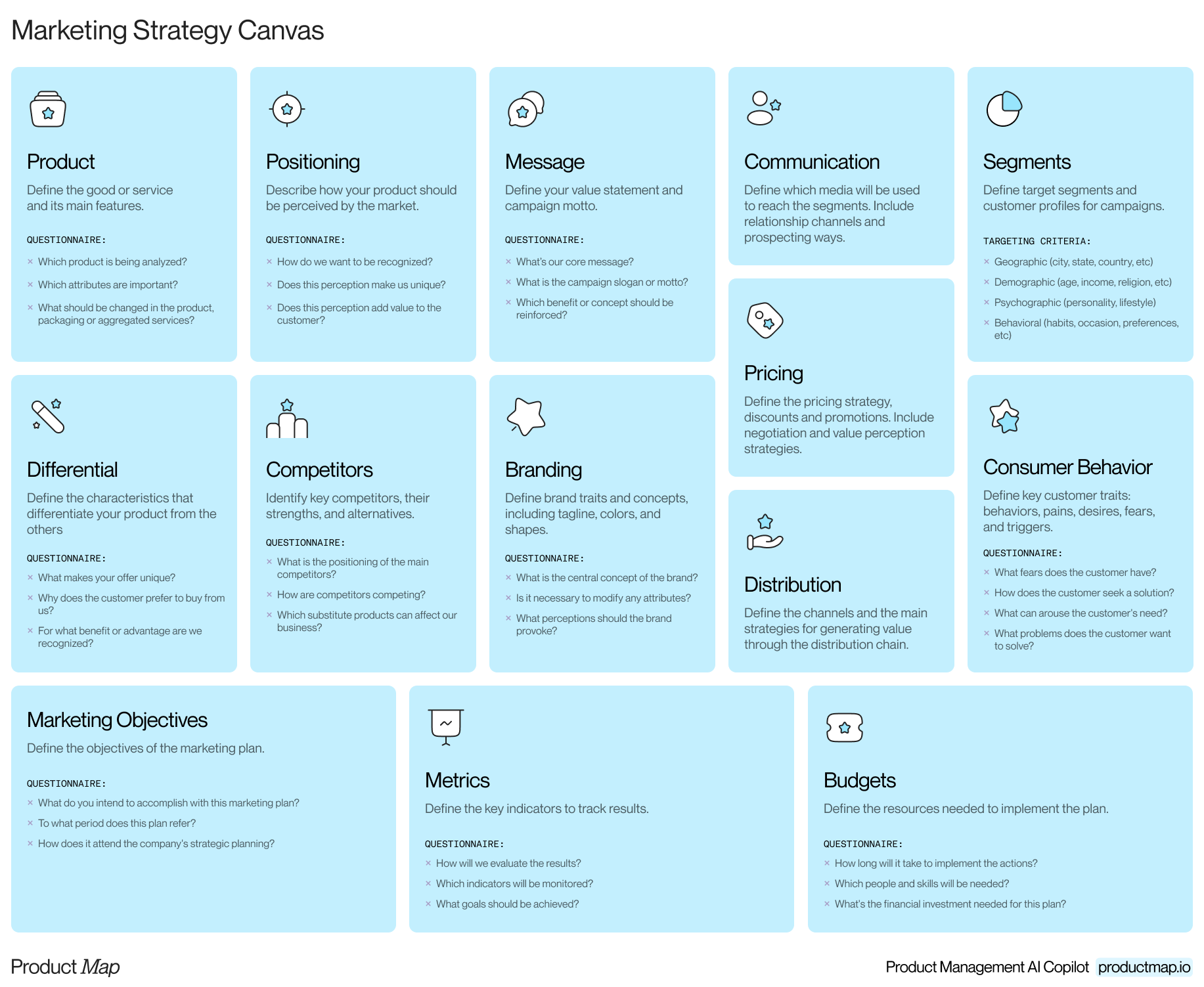



Digital marketing uses digital channels, content, data, and product experiences to attract, convert, retain, and grow customers.
For product managers, digital marketing is not just a promotion function. It is part of the product growth system. Marketing can bring attention, but the product must turn that attention into activation, value, retention, and revenue.
The practical question is simple: How do we turn the right attention into activated, retained, profitable customers?
That question connects product and marketing. Marketing usually owns reach, campaigns, media buying, content distribution, and message delivery. Product contributes audience insight, positioning inputs, onboarding, activation, product analytics, retention loops, pricing inputs, and in-product channels.
When the relationship works, marketing does not simply "drive traffic" and product does not simply "ship features." Both teams learn from the same customer behavior.
Why PMs Need Digital Marketing
Product managers need digital marketing because customer acquisition is part of the product system. A campaign can only work if the product promise is clear, the landing experience matches that promise, the onboarding path delivers value, and the measurement system shows what happened after the click.
PMs are especially important in five areas:
Positioning. Marketing needs a clear answer to who the product is for, what alternative it replaces, why it is different, and what proof supports the claim.
Audience. Campaigns need a segment, not a vague persona. PMs bring customer research, usage data, win/loss insights, and problem context.
Activation. Acquisition has little value if new users never reach the first meaningful outcome.
Retention. Digital marketing can bring users back through lifecycle campaigns, community, education, and referrals, but the product must remain useful.
Measurement. Marketing data and product data must connect. A channel that brings cheap signups but poor activation is not a good channel.
A useful PM deliverable is a one-page growth brief:
Target segment
Customer problem
Positioning statement
Main promise
Channel hypothesis
Landing or product path
Key events
Success metric
Guardrail metric
Learning question
This makes marketing more testable and keeps product decisions tied to customer acquisition reality.